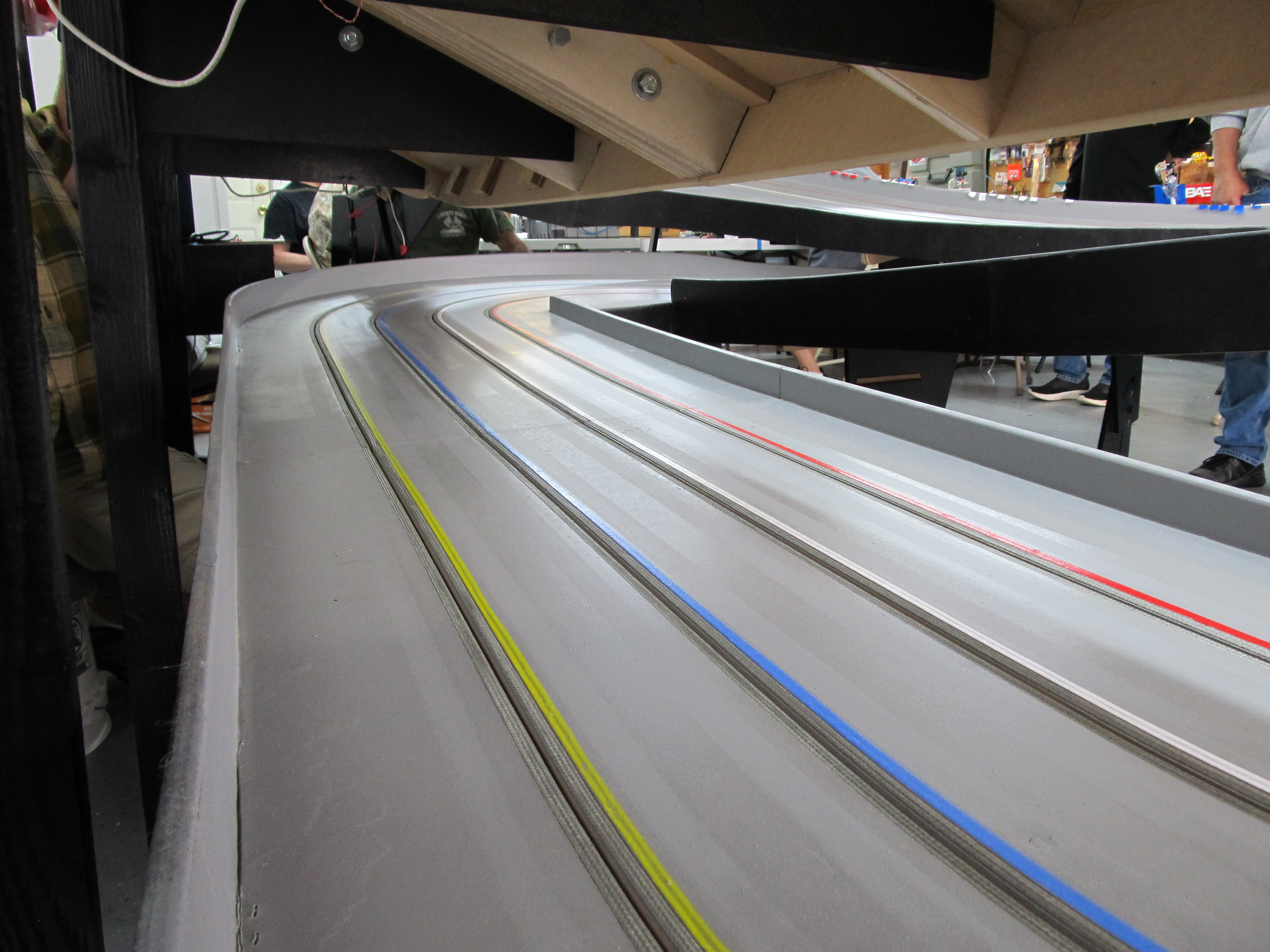
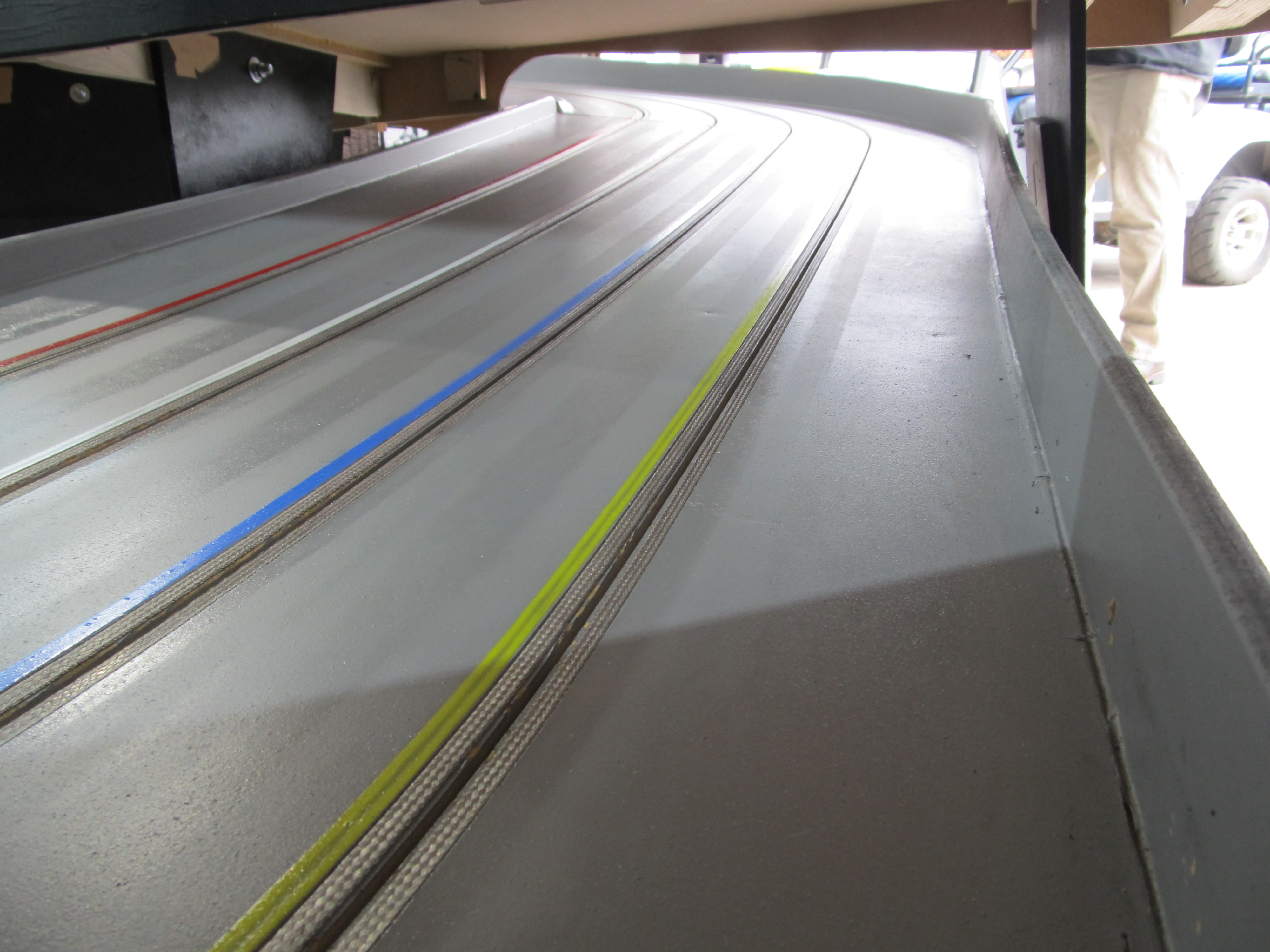
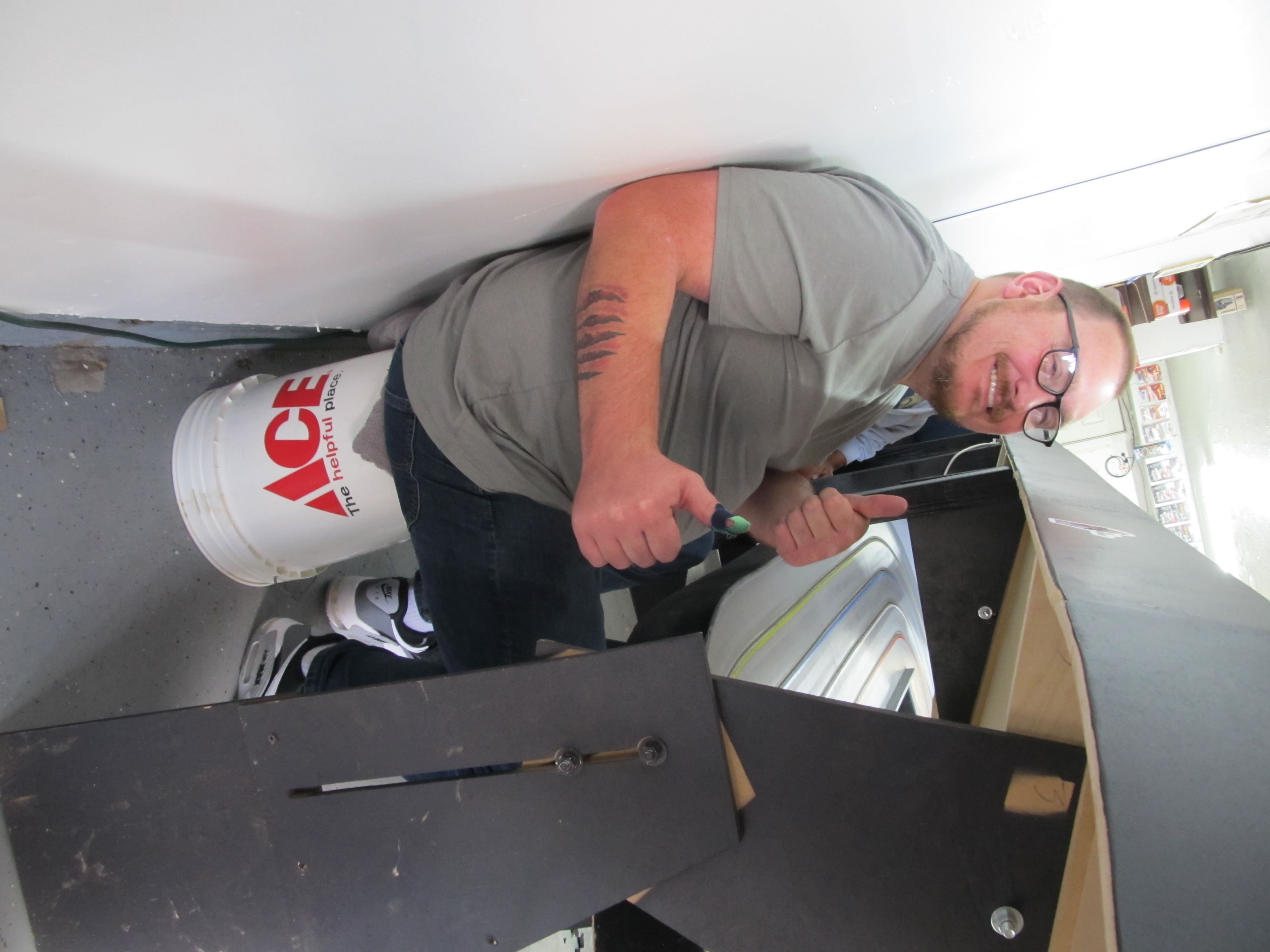
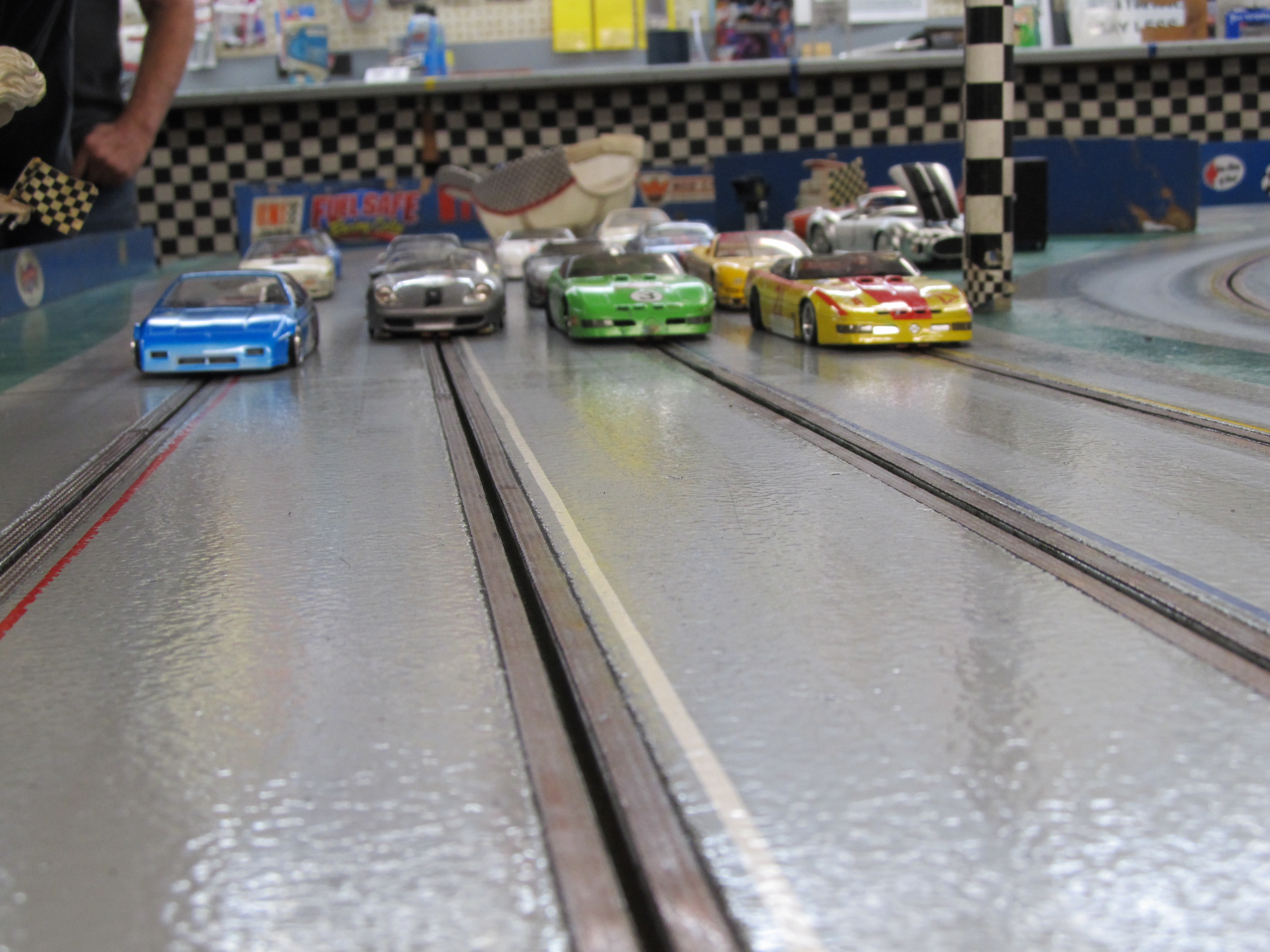
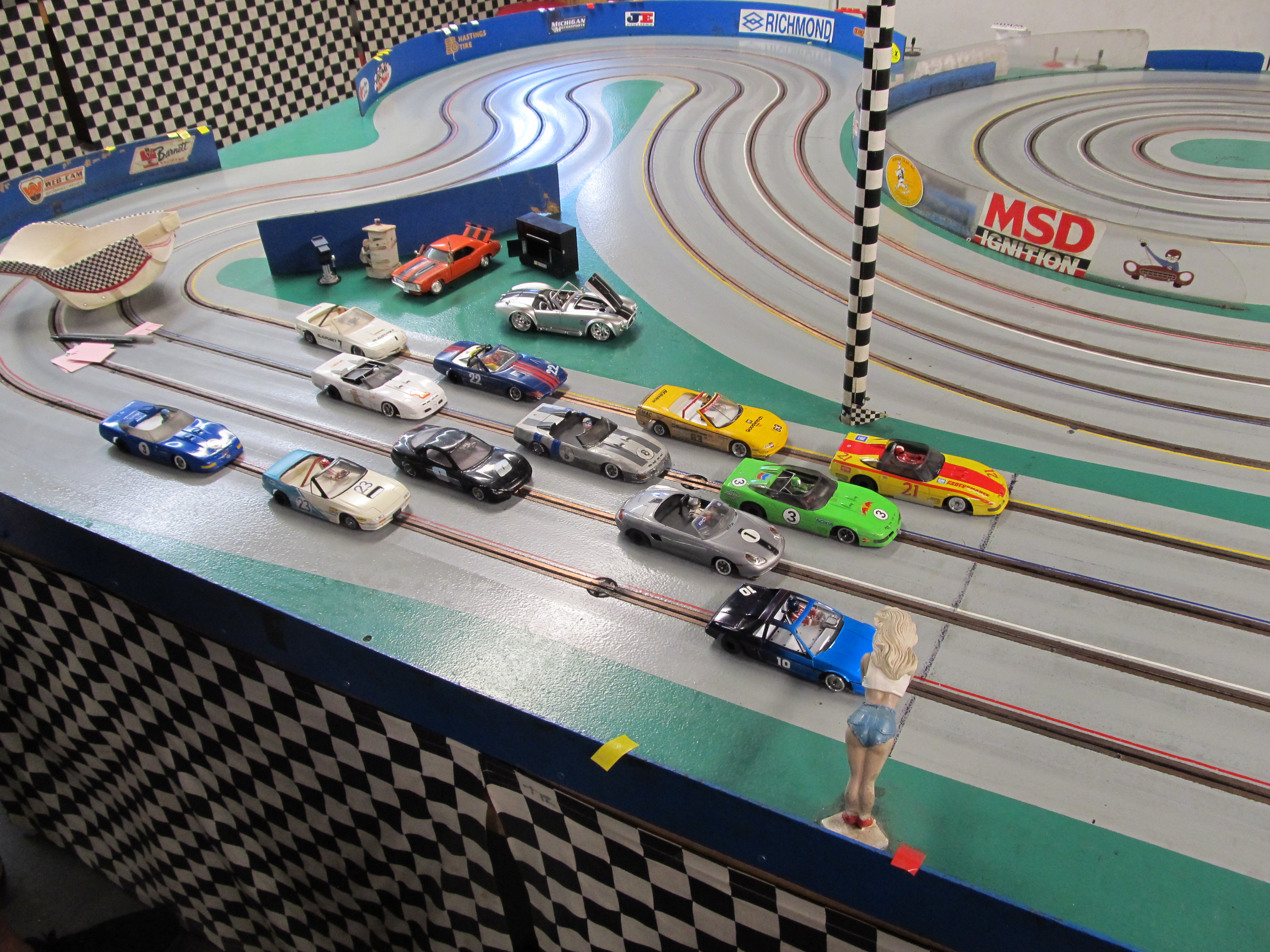
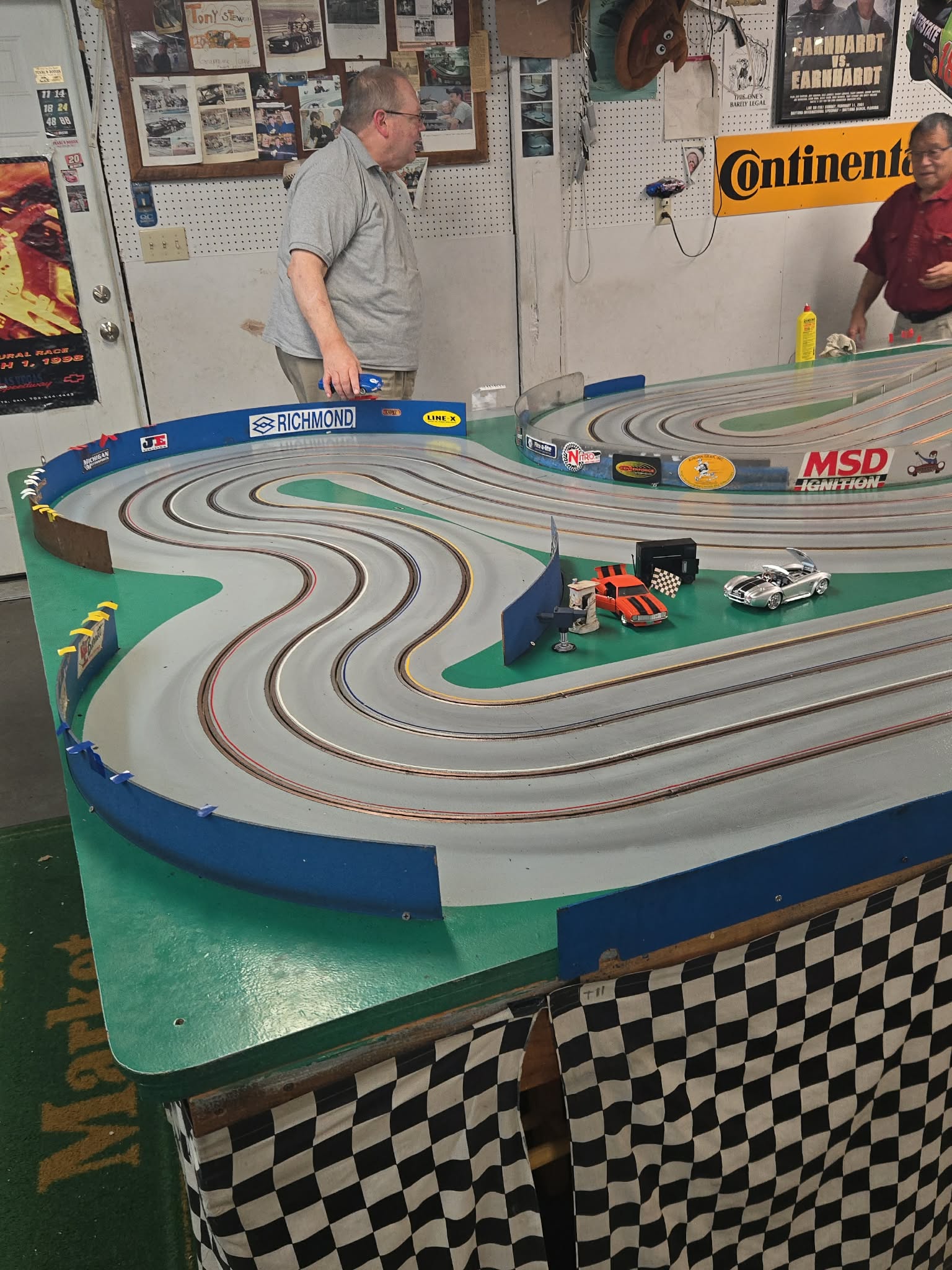
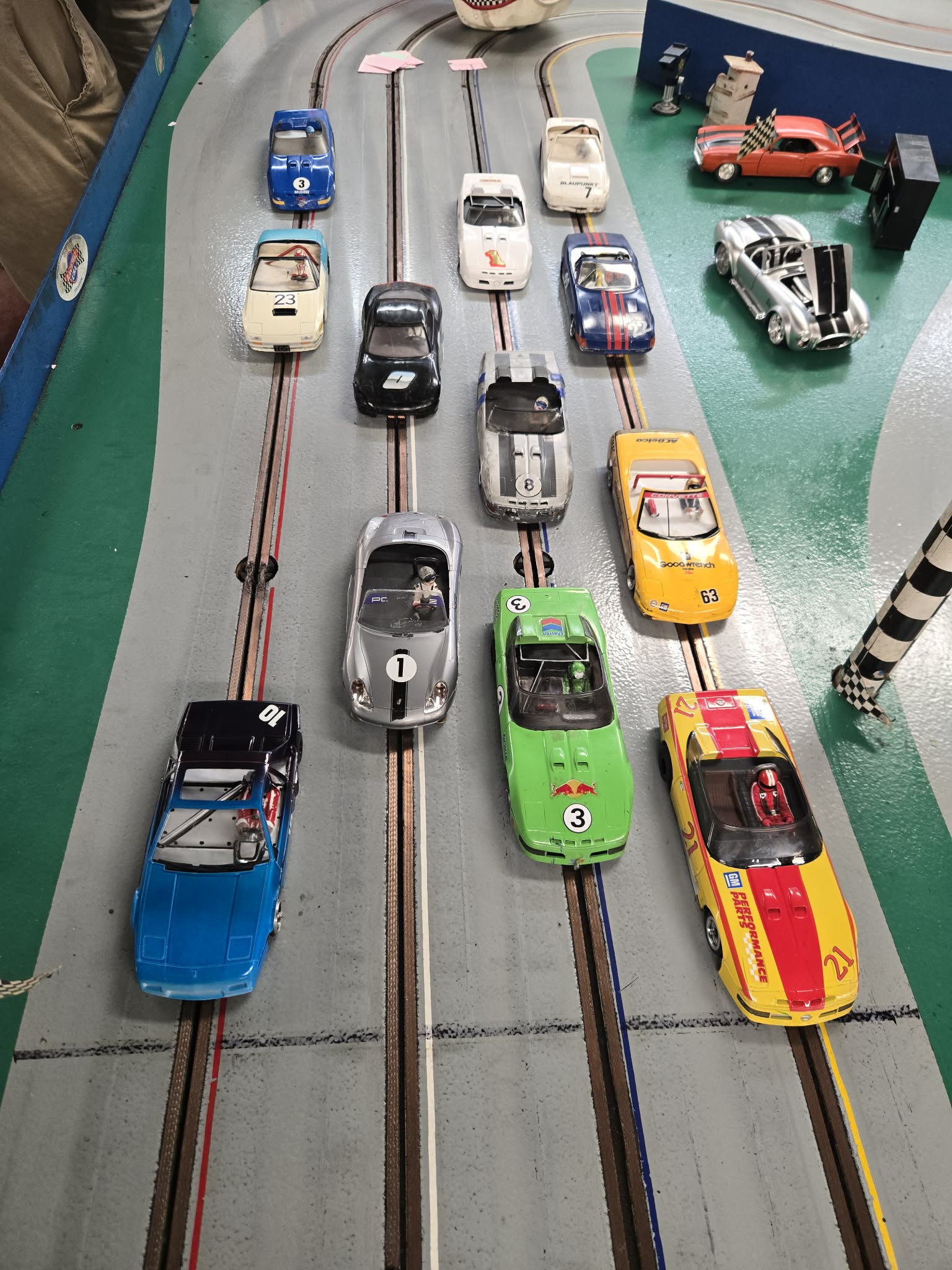
To date this is the most useful soldering block I have used. It is made for jewelry work and is available on Amazon. There are two sizes, and this is the largest size. It will withstand the heat from a torch for soldering the thicker flat brass. The pins for locating and securing your work are also available on Amazon (metal pins for dental lab honeycomb firing trays).

http://www.naste.org/members/bill/chassistools1a.jpg

I see these advertised as drag chassis jigs. It has a slot with a captive nut and screw set up for adjustability in building the guide flag tongue. It also has permanent pins for alignment of either 1/8" or 3/32" rear axle mounts.

http://www.naste.org/members/bill/chassistools1n.jpg

So I'll close this out with a couple of items I got from Gary "Goose" Gossett. First is an aluminum block that is drilled and threaded. I figure from the smallish size it was intended for use in building 1/32 cars. It has been nicely machined flat, but I don't know what its intended use was. I have no other parts for it, maybe it was not completed....

http://www.naste.org/members/bill/chassistools1k.jpg

This one is old! It's just a tech block, but from a time before Lexan and plastics were widely used for tech blocks and other things.
It is actually made from two clear sheets, drilled at the corners and secured together by screws and nuts. It looks like the guide flag slot was made with a soldering iron. A piece of paper with his name and address is sandwiched between the clear pieces. I met Goose in about 1980. The address listed on this tech block preceeds the address he lived at when I met him. This is the type of thing we would make when I was young. Why buy something if I can just make it? This tech block reminds me of my friend Goose!

  http://www.naste.org/members/bill/chassistools2a.jpg
http://www.naste.org/members/bill/chassistools2b.jpg

This block is smaller than the R-GEO block previously show (I believe it may also be made by R-GEO). This one is suited for 1/32 building and again, light soldering.

http://www.naste.org/members/bill/chassistools1l.jpg

http://www.naste.org/members/bill/chassistools1m.jpg

This KC Racing - Lucky 7 jig is one of my newer purchases. I have not had an opportunity to use this one yet, but from what I read it is made for more extensive soldering work on brass chassis. It has nice scribed lines, has holes drilled for pins, and has a slot machined for a screw and nut guide tongue hold down. It comes with the hardware.

http://www.naste.org/members/bill/chassistools1s.jpg

http://www.naste.org/members/bill/chassistools1t.jpg

This is another smaller jig, better again for 1/32 building. It has threaded holes for a thumb screw and aluminum tie down plate. It also has holes for metal pegs/pins.

http://www.naste.org/members/bill/chassistools2d.jpg

http://www.naste.org/members/bill/chassistools2e.jpg

There are also quite a few very specialized blocks available. I have tried a number of them, but most are better suited to builds with minimal soldering. Working with a torch on thick brass strip tends to damage them. You can tell from the name and email address this is an old jig! It is very nice and great when you don't need a lot of heat for the build.

http://www.naste.org/members/bill/chassistools1b.jpg

Back Track @ AOL.com!
http://www.naste.org/members/bill/chassistools1c.jpg

Threaded holes, hold down pieces, measured and scribed guide flag tongue hold down.
http://www.naste.org/members/bill/chassistools1d.jpg

http://www.naste.org/members/bill/chassistools1e.jpg

Nice rubber feet on the bottom too!
http://www.naste.org/members/bill/chassistools1f.jpg

These are nice R-GEO blocks. They come with steel pegs and pins, and thumb screws with aluminum pieces for hold downs. The center slot is machined so a screw and nut can slide up and down the block for varying guide flag tongue lengths and positions. These are great jigs but, I would not recommend them for building the Pacific Northwest style of hardbody chassis.

http://www.naste.org/members/bill/chassistools1g.jpg

http://www.naste.org/members/bill/chassistools1i.jpg

This is my first one. I used it to build an .090" brass chassis.
http://www.naste.org/members/bill/chassistools1h.jpg

http://www.naste.org/members/bill/chassistools1j.jpg

This is just a standard wooden tech block. being wood or some laminate these are not very good for soldering on. very useful for set up and tech inspection! I have a bunch of these if anyone needs one!

http://www.naste.org/members/bill/chassistools2k.jpg

This is a pretty cool aluminum machined block, finished on both sides. One side is machined with just a slot, the other side has a raised section in the middle. I don't know where I got this one, or who made it. I wonder if the raised portion is to serve as a heat sink to cool the motor down during races? If you set a car on this side the raised section keeps the car's rear tires off the block.

http://www.naste.org/members/bill/chassistools1y.jpg

http://www.naste.org/members/bill/chassistools1x.jpg

Here is another specialized block. This one has magnets imbedded in it to hold a steel chassis in place. Although the block material looks like it could withstand the heat from soldering, I think that heat would damage the magnets. I think this block is best used for set up and mounting clear bodies on flexi type cars.

http://www.naste.org/members/bill/chassistools2i.jpg

http://www.naste.org/members/bill/chassistools2j.jpg

This block has a recessed space for a guide flag. I don't normally solder on a chassis with the guide flag in place, but this block might be handy for repairs or changing motors where they are soldered in place.

http://www.naste.org/members/bill/chassistools1u.jpg

This is a flat piece of wood with some sort of material laminated to the top. Whoever made this one countersunk a nut in the top, I presume to secure a guide tonge. It has also been scribed with horizontal and vertical markings and holes have been drilled for pins. This would probably be OK for light solder work, but you can see where the top laminate has been distorted by heat.

http://www.naste.org/members/bill/chassistools1z.jpg

http://www.naste.org/members/bill/chassistools2.jpg

This is a great soldering block from Carlisle and will withstand the heat from a torch.

http://www.naste.org/members/bill/chassistools2f.jpg

http://www.naste.org/members/bill/chassistools2g.jpg

http://www.naste.org/members/bill/chassistools2h.jpg

Here is a piece of aluminum that has a magnetic sheet glued in place. This probably be better for assembly proceedures. I don't know that it would withstand the heat from soldering on it. 

http://www.naste.org/members/bill/chassistools1o.jpg

Although it is nice having some way of securing your work and holding small pieces in place, all you really need for soldering chassis is something flat. There are a lot of different blocks available for soldering chassis and keeping them flat. Here is just a flat deck/block with a slot for a guide flag.

http://www.naste.org/members/bill/chassistools1p.jpg

This is the same style deck/block but it has holes drilled in it for steel pegs and it is scribed with a centerline for reference.

http://www.naste.org/members/bill/chassistools1q.jpg

Here is another flat block made of a different material.

http://www.naste.org/members/bill/chassistools1r.jpg

This is just to give you an idea of just how many different jigs and blocks I have.

http://www.naste.org/members/bill/chassistools1.jpg

This jig is an aluminum plate design. It has an adjustable guide tongue fixture that is missing from this picture (the guide tongue fixture fits another jig I have). I believe it originally had other pieces that secured to the deck that I don't have. This is another jig that I have no idea where it came from. If anybody recognizes it, please let me know!

http://www.naste.org/members/bill/chassistools2o.jpg

http://www.naste.org/members/bill/chassistools2p.jpg

http://www.naste.org/members/bill/chassistools2q.jpg

I mentioned earlier that Gleen and I didn't know of any commercially available chassis jigs. Well I forgot about this one from RussKit! This jig is good for building brass or steel rod type chassis. The pieces for front and rear axle alignment are adjustable for varying wheelbase lengths. The deck is aluminum and not meant to be used as a flat soldering surface. It is a good jig, but a little difficult to work with when building with flat brass pieces.

http://www.naste.org/members/bill/chassistools2r.jpg

http://www.naste.org/members/bill/chassistools2s.jpg

I mentioned Glenn Heath as he and I started the 1/24 racing journey together. I fell out of the racing in the late 1980's, but Glenn stuck with it. He became a really good chassis builder! This is his original chassis jug he built when I built mine. As you can see his jig was much more developed and refined than mine! Glenn built many, and I mean MANY chassis on this jig! When he would build a new design he would add threaded holes in different positions for alignment and securing the work. He used steel pegs and screws for aligning and securing. Glenn used thinner aluminum for the "deck" (flat surface) of his jig. This helped with the heat transfer issue from the brass to the aluminum. I sure miss Glenn, I think I may have to build something with this jig just for old times sake!

http://www.naste.org/members/bill/chassistools1v.jpg

Here's another old building jig. This one is steel and HEAVY! It has a non-adjustable fixture for rear axle alignment, and an adjustable fixture for guide tongue postioning and alignment. It also has a scibed centerline mark for referrence. I cannot remember where or whom I got this jig from. It's an oldie!

http://www.naste.org/members/bill/chassistools2c.jpg

I just want to say up front; I am not a good chassis building. I have been working on my skills for YEARS, but have made little progress.....I know one thing for sure, I don't do it enough!

I went out to the shop this morning to work on an Early Modified chassis I started the other day. I thought I would solder together some of the parts I had prepped. Here in the Pacific Northwest where we race "Hardbody" (model car injection molded bodies) cars, we use .090" flat brass (sometimes .062") for pieces of the chassis construction such as center pans and side pans in particular. Soldering these thicker pieces of brass (especially .090") can be challenging! Having a flat surface is a must, and having a way to secure the pieces to that flat surface really helps! So the first thing I did was go searching for my chassis jig (or more applicable; jigs).

I'm probably not much good for information on "how to" solder chassis, but maybe I can guide some of the new guys when it comes to picking up a good chassis jig to fit their needs. So here are my chassis jigs and what needs they fit for me.

My initial exposure to "scratchbuilding" came when I met the guys in the PASER Club for the first time in the early 1980's. Man, those model car bodied slot cars with the home made chassis were so cool! I had to have one! I had no idea how to go about building a chassis, or even what tools I needed. I had many failed attempts when I first started. After awhile Glenn Heath and I started getting more serious about trying to build chassis. Most of the "old" guys were using a piece of some hardwood as a flat soldering block. It was a particular kind of hardwood, but exactly what escapes me right now. There was no internet and Glenn and I knew of no commercially available blocks we could buy. So we decided to build something. Here is what I ended up with:

http://www.naste.org/members/bill/chassistools2l.jpg

I used a piece of thick aluminum as the flat block to build on. As I build more chassis I would add other pieces to hold parts in place and keep them aligned. The piece of square steel bar across the front of the jig acted as a square for alignment to keep the chassis and parts square to the chassis centerline. The row of holes on the jig's centerline were threaded and used for soldering the guide tongue to the chassis. Various lengths could be used by using different threaded holes. The set screw held the guide tongue in place, and the spacer kept the tongue parallel to the center section.

http://www.naste.org/members/bill/chassistools2m.jpg

I added two pieces of aluminum angle I built to use as rear axle jigs. The pieces screwed to the jig. I abandoned their use after building the first chassis with this set up. I found that rear axle alignment was critical, and the jig needed to be exact. This one was not!

http://www.naste.org/members/bill/chassistools2n.jpg

I used this jig a lot, building more than 20 chassis on it. I built all of the original NASTE (Radio shack motor) chassis on this jig. The biggest draw back of this chassis jig is its aluminum construction. The aluminum flat plate sucks so much heat out of the brass, it makes soldering more difficult. The upside was it is very durable!

11

(4 replies, posted in Cars)

2025 and NOTHING has changed!

12

(6 replies, posted in Cars)

Steven (A.K.A. Steven Page) is now the caretaker of Beau's beautiful Corvette. Steven is currently having Jim Mitchell build a new chassis for the yellow 'Vette. Beau had separated the body from the chassis years ago, and unfortunately I did not get photos of the chassis he specifically built for this car. Watch for this one to be back on the track!

13

(17 replies, posted in NASTE)

Great job Chris, Stan, Jake, and Marty! Thanks for the report and photos Chris!

I am glad I participated one year, it was an experience. It is just a little too much for me. I struggle with six hour long events!

Steven; this is an event you would really like!

I really enjoyed this race! So many friends to share a day of competition with!

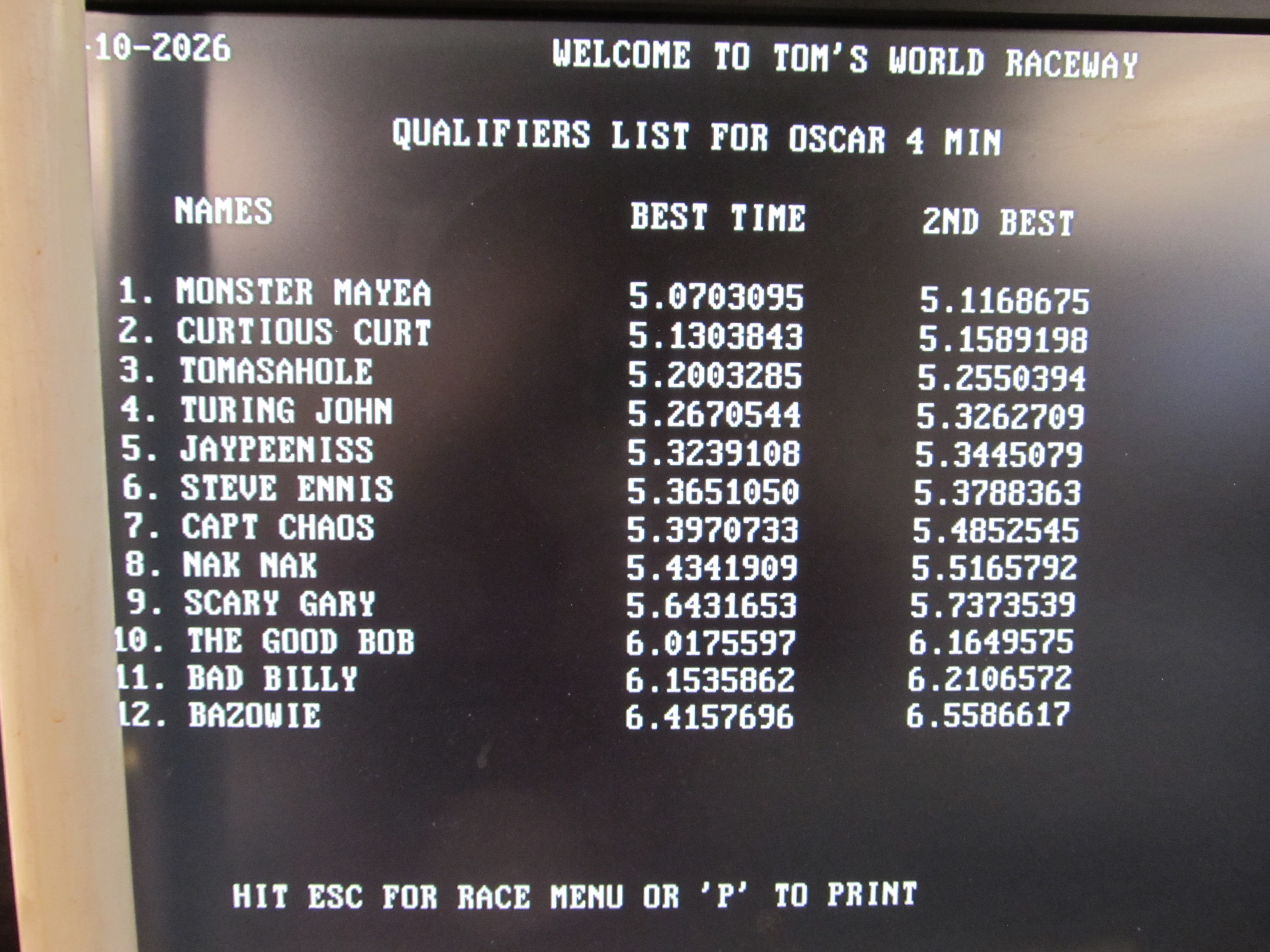
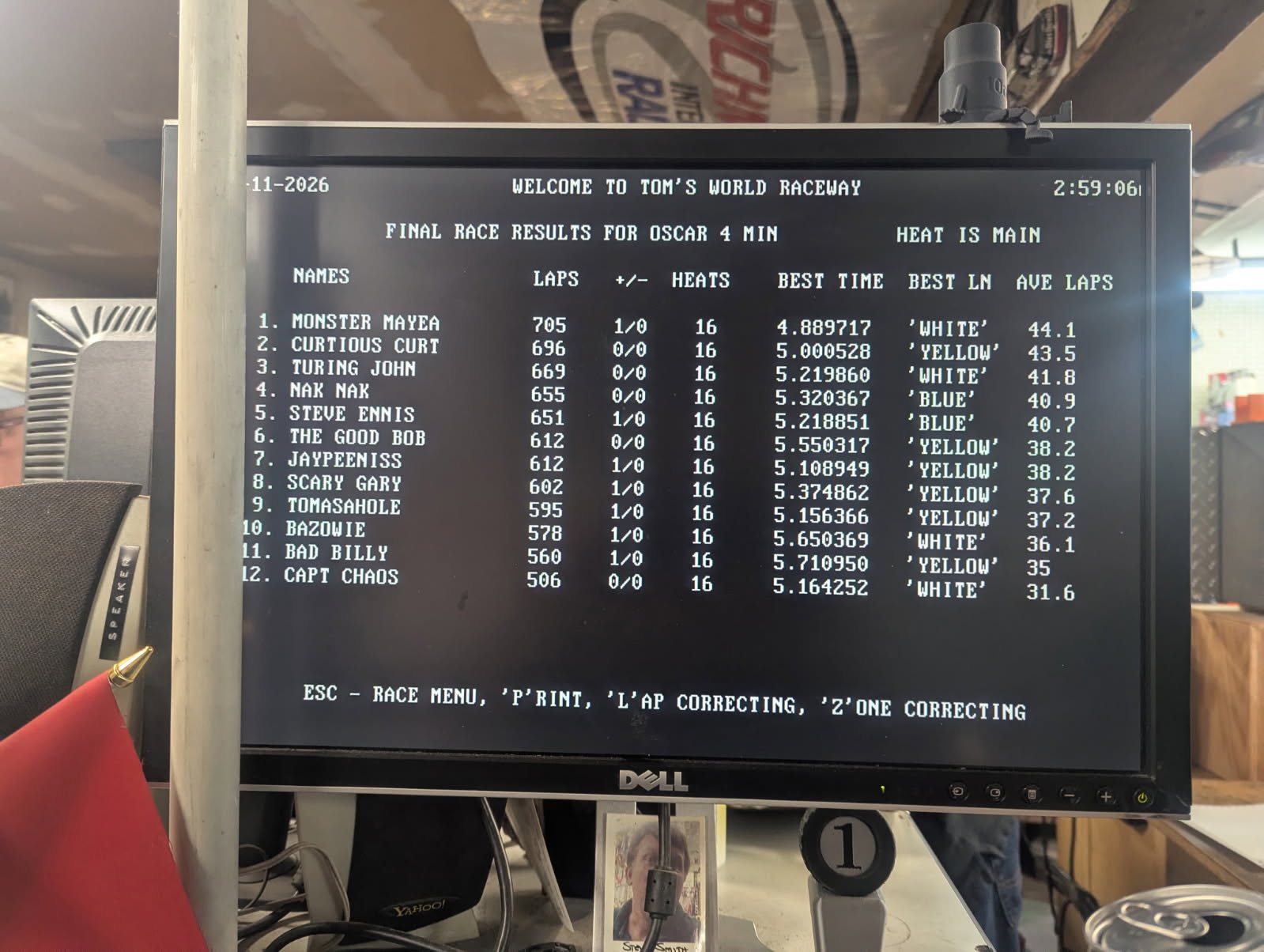
Here's some data from the race you can geek out with if you're interested:

http://www.naste.org/members/bill/OSCAR_ICF_NOV2025n.jpg
http://www.naste.org/members/bill/OSCAR_ICF_NOV2025k.jpg
http://www.naste.org/members/bill/OSCAR_ICF_NOV2025l.jpg
http://www.naste.org/members/bill/OSCAR_ICF_NOV2025m.jpg

A special THANK YOU to Mitch for coming to the race and helping us out! Mitch turn marshalled the entire race for us!

Thanks to all that made it out and made this such a great event!

Round four was the Bob and Stuart show! These guys provided us with some fantastic side by side racing through the entire race. Unfortunately in Stuart's next to last heat race he lost a braid from his guide flag in a crash. He was quick to make the repairs but it was enough for Bob to get by him and into the lead. Although Stuart pushed him, Bob was just too fast for Stuart to make up all of the ground he had lost. Bob and Stuart were never more than four laps apart through nearly the entire race. Chris' consistantly fast pace netted him third place, the highest postion of the racers from Bend. Somehow I hung on for fourth only four laps ahead of Mike. Al was able to close within four laps of Bart in sixth. Jim finished eighth two laps ahead of Jerry. Bill Henry closed out the top ten but, Herb was only nine laps out. Jimmy finished twelfth on his first visit to Inslot' Checkered Flag Raceway, but only eleven laps behind Herb. It was also Tim Moss' first visit to Checkered Flag, and his very first OSCAR race. He ran and excellent race completing enough laps to give him the thirteenth spot. Michael having suffered more issues dropping him back to fourteenth, but earning him the coveted "Too Bad" award! And speaking of the coveted "Too Bad" award, Steven worked himself right out of the award by displaying an incredible ability to not give up! The guy just would not give up and worked his way through multiple gear and motor issues! He may have been trailing the field but, he was the leader in effort! Unfortunately Ken had to leave early, but still poated a respectable 285 laps at the halfway point.

Round 4 Results:
http://www.naste.org/members/bill/OSCAR_ICF_NOV2025j.jpg

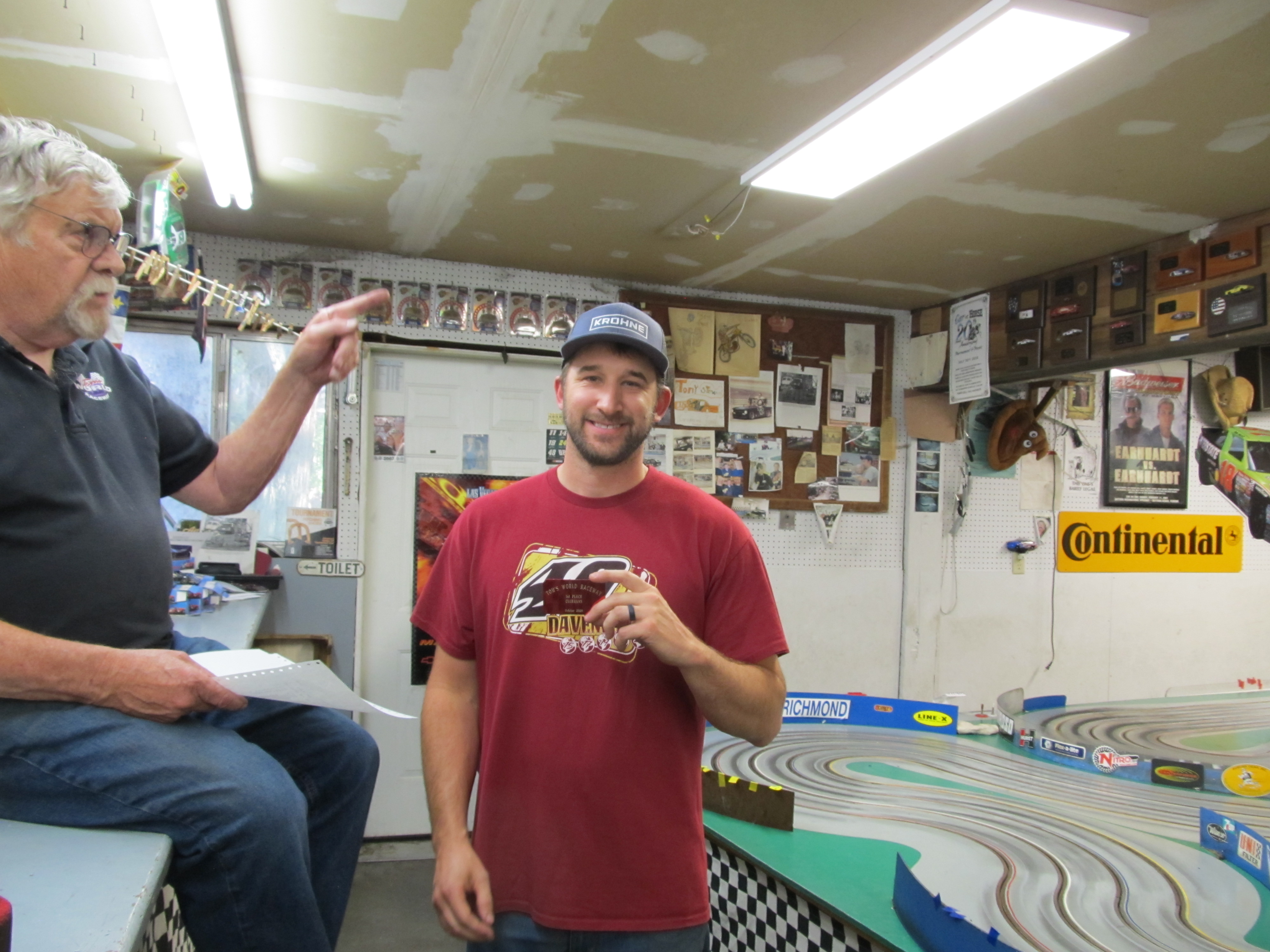
So congratulations to Bob on his well deserved win! To Stuart on his second place finish, and Chris on finishing third!

http://www.naste.org/members/bill/OSCAR_ICF_NOV2025o.jpg

After multiple votes were taken, Tim and Steven still tied for the "Best Of Show" (concours) award! They agreed to both take the credit!

http://www.naste.org/members/bill/OSCAR_ICF_NOV2025p.jpg

http://www.naste.org/members/bill/OSCAR_ICF_NOV2025q.jpg

http://www.naste.org/members/bill/OSCAR_ICF_NOV2025r.jpg

Racing through the second round Stuart pressed Michael tieing him for first place. Bob stayed close just two laps behind them. The battle for fourth through seventh heated up with Chris (Captain Chaos), Mike, Bill, and Bart having just one lap separating each of them. The rest of the field was still within striking distance. Steven showed his pit skills and had made repairs only to break again! But he was still working!

Round 2 Results:
http://www.naste.org/members/bill/OSCAR_ICF_NOV2025h.jpg

We took a break towards the end of round two for some lunch. A big thanks to my wife Diane for ordering and picking up our lunch which consisted of Fire House sub sandwhiches. Thanks also to everyone that brought snacks along to the race! After lunch we crawled our way into the third round of racing. Bad things started happening for Michael in the third round dropping him to fourteenth, just ahead of Steven who had still not given up working through his multiple mechanical set backs. This left Stuart and Bob out front, stretching their leads with Bob only three laps behind Stuart. Fourth through sixth were still tight with Al closing the gap from seventh.

Round 3 Results:
http://www.naste.org/members/bill/OSCAR_ICF_NOV2025i.jpg

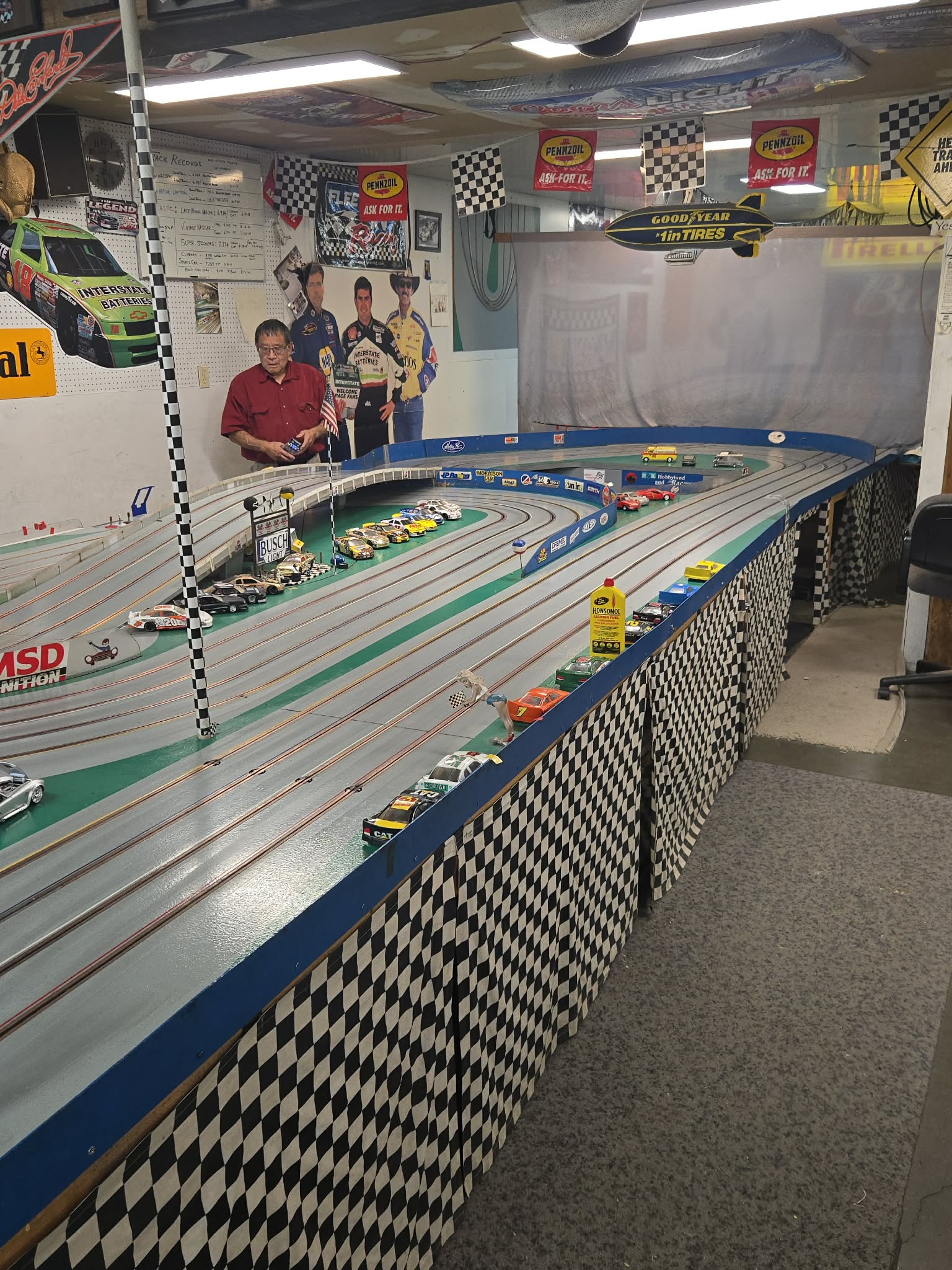
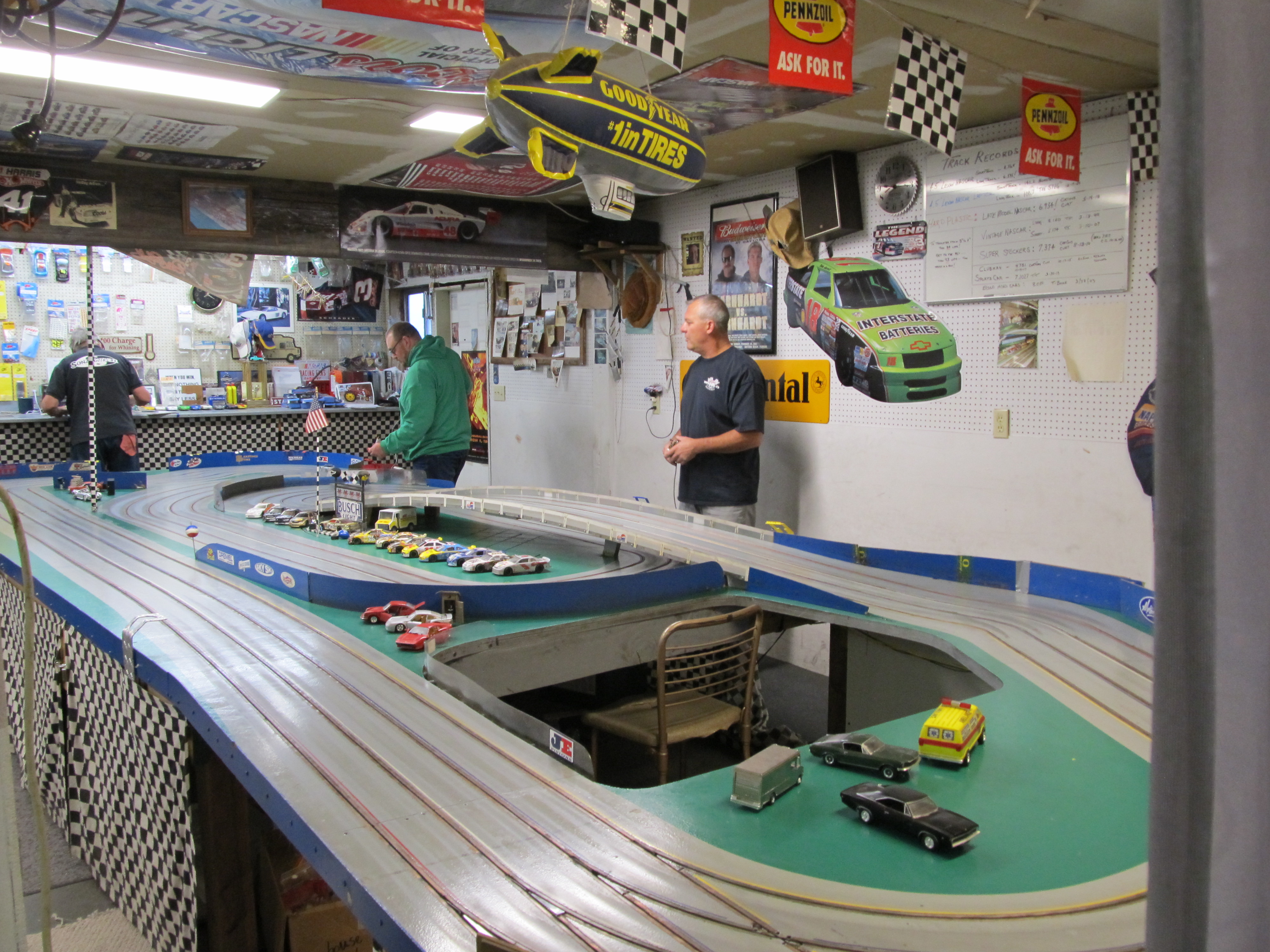
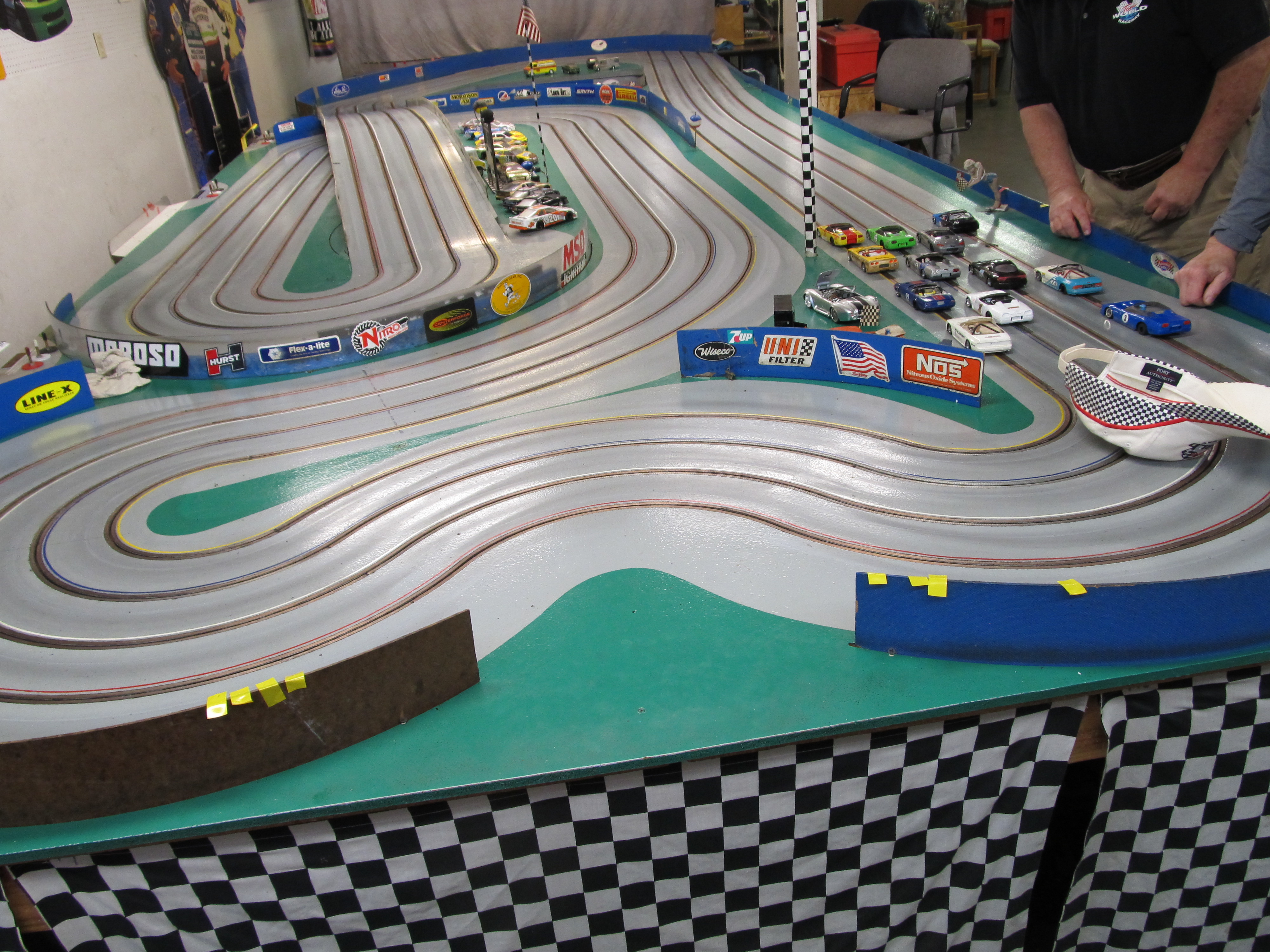
For me, OSCAR races have always been a big deal! Entries typically include some of the most sophisticated, complicated, and fastest chassis built for "Hardbody" racing in 1/24 scale. For those not familiar with the term "Hardbody", it refers to scratch built slot cars with injection molded model car bodies. This type of slot car racing has been the backbone of club racing here in Oregon. OSCAR races have always drawn some of the fastest and best racers in the Pacific Northwest. The thought of me ever hosting races for this elite group never even entered my mind in the 1990's! Today there are a number of clubs racing 1/24 scale slot cars in our area. At times OSCAR races draw racers from all of the various clubs. They come to race the fastest cars, competing against the best racers. OSCAR races are long and grueling. They take a toll on equipment as well as racers, mentally and physically. This November race is the race I host here at Inslot's Checkered Flag Raceway. It has always been, and continues to be, a Late Model NASCAR race per OSCAR rules in honor of Bob McFarland.

http://www.naste.org/members/bill/OSCAR_ICF_NOV2025f.jpg

The night before the race the track was open for practice. We had a number of racers show up, some to practice and some to just visit. The doors officially opened for the race at 9:00 AM Saturday, and by 9:15 AM most all of the participants had their pits established and were getting some track time. Tech inspections started early with racers anxious to get the race started. Unfortunately Tom Street whom I consider to be the lead figure in OSCAR, was sick and could not make the race. Typically OSCAR races are run using the SRT racing program, a program I have, but am not really familiar with. Tom has always taken the lead running the OSCAR races here at Checkered Flag. For this reason I made the decision to use the Race Coordinator program I also have set up for the track. I also made the decision to forgo qualifying by time trials, another OSCAR race standard. Without the use of qualifying I set the race starting grid by using racer's past finish results and their race history that I had knowledge of. Some technical data, some intuition, and some seat of the pants reasoning. Racers agreed to the line up I submitted without complaints.   

http://www.naste.org/members/bill/OSCAR_ICF_NOV2025s.jpg

From the drop of the flag it was evident this was going to be a close race. Michael (Stig) lead the field in the first hour of racing with Stuart  (Stew Meat) and Bob (Nak Nak) tied for second. Those guys had posted a substantial ten plus lap lead over the rest of us. There were no other big leads through the rest of the field. Steven (Dragin' Man) had started out with top five speed but suffered a mechanical issue early. We were to find out he was not down and out!

Round 1 Results:
http://www.naste.org/members/bill/OSCAR_ICF_NOV2025g.jpg

I have gotten rid of most all the plastic track I had, Scalextric, Revell, Carrera, even some Thunderjet 500. With all the alternatives out there, such as Viper HO tracks, and wood routed tracks, plastic track just does not have much value anymore.

CLAIMED Nov. 6, 2025!

WOW! That looks like it was some great racing!

Congrats to Bill Henry on his Womp win! Two racers with over 150 lap totals, and three with over 140!

And that Flexi race! Top five all over 180 laps!

I believe Jimmy is looking for more Revell track.

Moving this track to Facebook Market Place on Tuesday................

Goodwill on Thursday...............

I recently acquired 2 large plastic tubs full of Scalextric Sport track!

There are also boarders and guard railings.

Come and get it!

===Bill

24

(10 replies, posted in NASTE)

So this is what the "night" or "dark" segments of the race look like!

https://www.youtube.com/watch?v=GWr9V2cq0KA

https://www.youtube.com/watch?v=eHYTUbm_MUo

Thanks again Howie for hosting this event at Rapid Raceway!

25

(10 replies, posted in NASTE)

Bryan Trachsel's return was marked with back to back victories! Here are the race results:

The first round of racing was in full light. One round of two minute heat races.

http://www.naste.org/members/bill/NASTEHalloween2025IMG_0556.jpg

The second round was held under total darkness!

http://www.naste.org/members/bill/NASTEHalloween2025IMG_0559.jpg

The gang was all here! Veterans of MANY Halloween races!

http://www.naste.org/members/bill/NASTEHalloween2025IMG_0555.jpg