1

Topic: Nostlagia.......Rookie Northwest Style.

My good friend Dave Smith came by the shop along with Brian Tooley this last week. I always enjoy a visit from these guys. Brian for his enthusiasm as a somewhat new enthusiast, and Dave because I have known him through my entire slot car racing experience. I met Dave in the early 1980's or maybe late 1970's. I don't really remember exactly. What I do know is as far as slot car racing he has always been part of my experience! We started out racing HO cars in the Portland area and all up and down the Willamette Valley. Then we found out about the PASER club in the early '80s and started racing at Lee Dundas' barn in Willsonville. We raced 1/32 Parma Womp Womps and scratch built 1/24 cars with 36D motors and model car bodies. In those early days the chassis were very basic brass scratch built, with an inline motor configuration flat chassis. There were no hinges or moving parts to the chassis. They were basic and pretty simple to build. That in no way distracted from the fun!

Everytime I get together with Dave we can't help but reflect on the "old days". Simpler times for sure, but just as much racing fun from my memories. Today I got an urge. Back then when we were racing the hard body 1/24 inline cars, the club for a short time  also raced some 1/24 anglewinder chassis with 36D motors and clear bodies. They were way superior to the inline hardbody cars we were racing. At this point in time I left the slot car racing hobby for a period of time. When I returned the club was still racing hardbody cars with inline chassis, but they were now powered with much faster super 16D motors and inline chassis that featured hinges and separate moving parts. I was now way behind the curve. I had never really gotten up to speed on the first generation of hard body chassis design!

Building the new generation of chassis for racing with PASER was very difficult for me, and it still is! This and my recent reminiscing and discussions with Dave got me to thinking. How did the chassis designs jump from flat pan style to the hinged style with all the movement? What steps did I miss in between? Today I decided to explore, using my own strange reconstructive path.

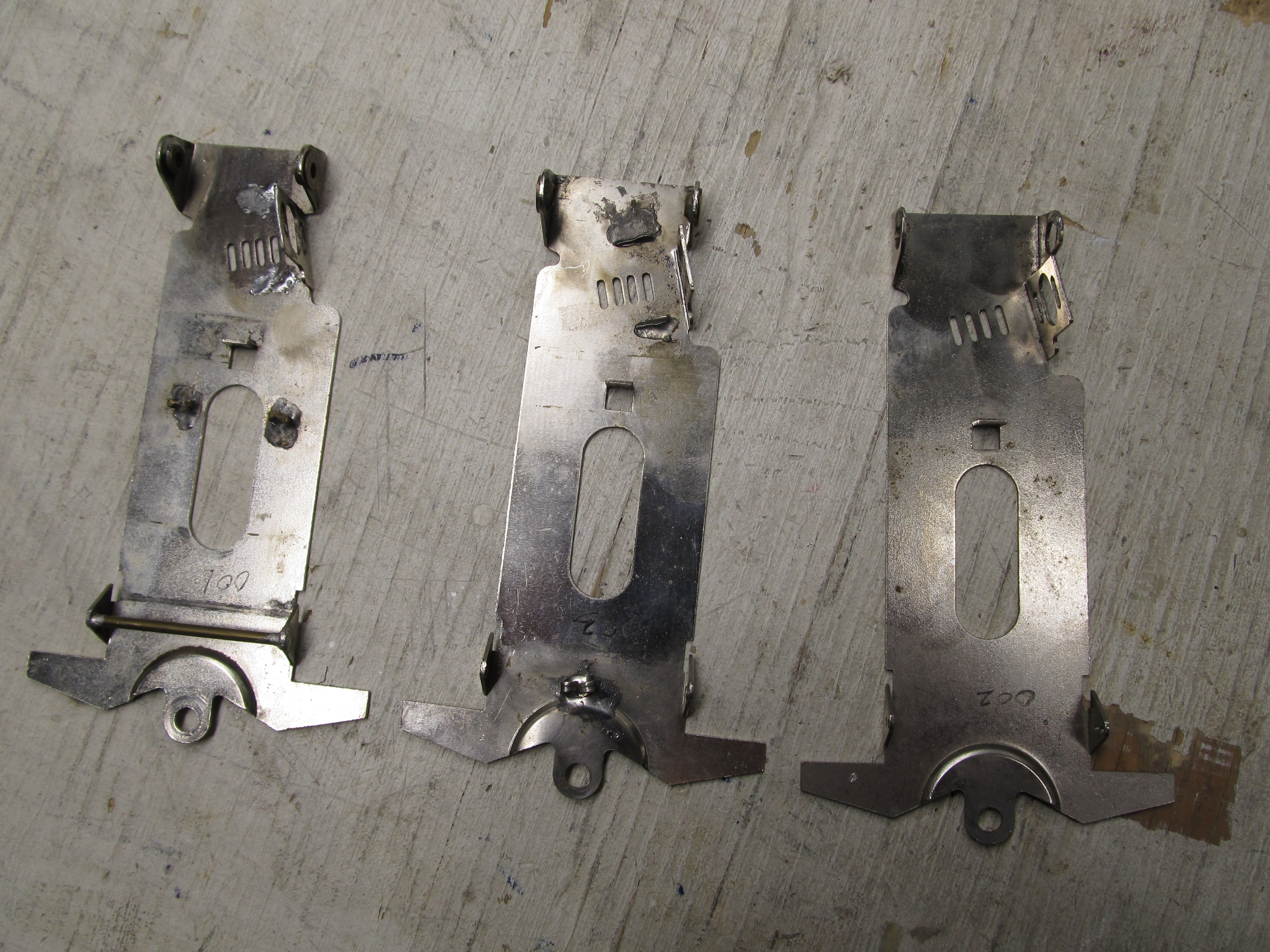
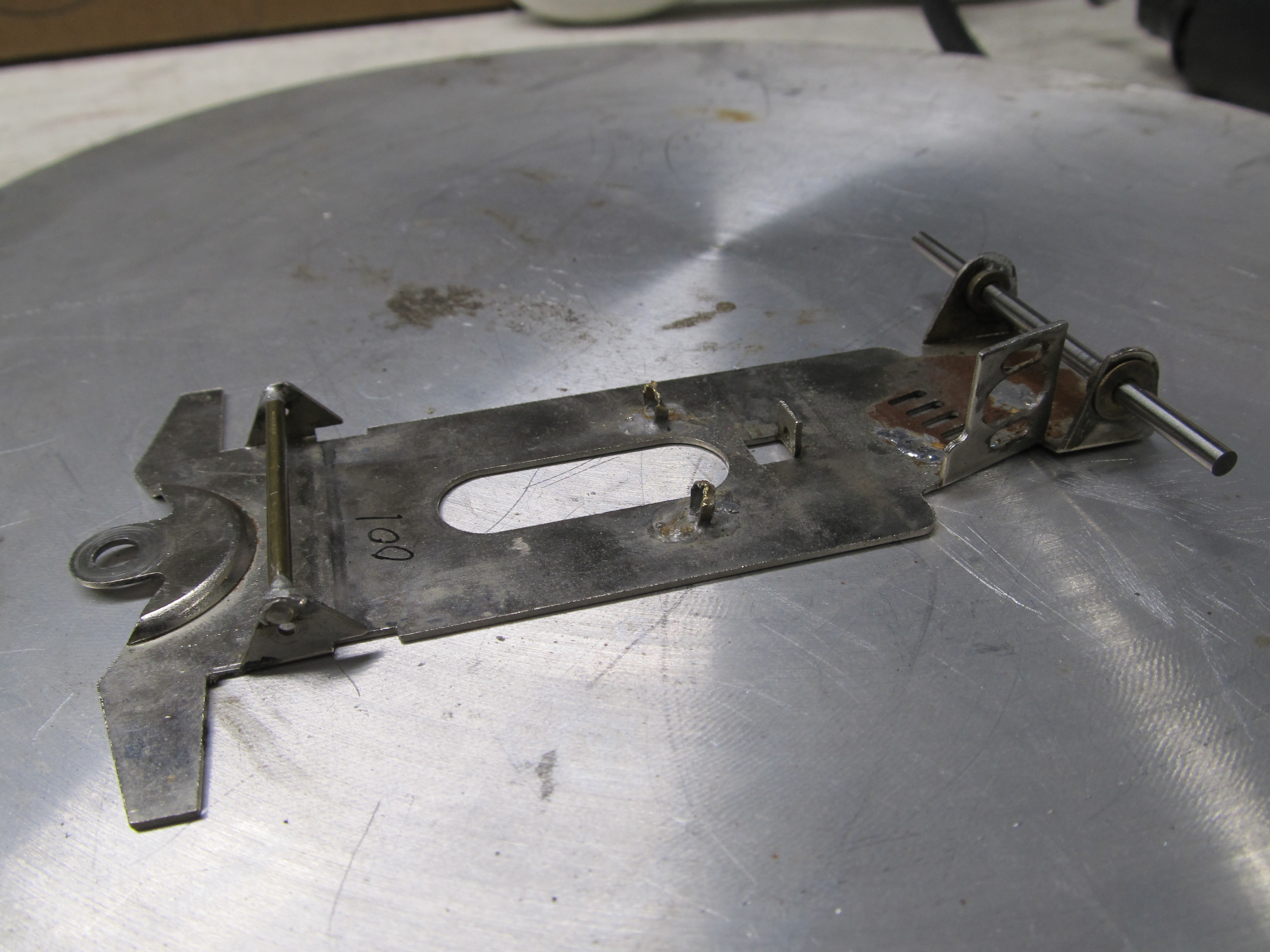
In those early PASER days of the inline scratchbuilt chassis I believe it was easier to build up the motor boxes in an inline configuration. You could also keep the the wider tires inside of the 1/24 model car body with an inline configuration. There were sidewinder chassis from the '60s with 36D motors, and then there were anglewinder chassis with 16D motors. Two piece stamped chassis that worked great! But my question is; was there any experimentation with angle or side winder chassis for the 16D with just a flat pan design? Well, being a slot car adict that has plenty of used "Flexi" type chassis and parts, I though I might experiment a little.
http://www.naste.org/members/bill/Slab_36.jpg

2

Re: Nostlagia.......Rookie Northwest Style.

My plan is to experiment with a flat pan style chassis with the motor mounted in an anglewinder configuration. Why, because I didn't see it done in my early experience racing with the PASER guys. The goal is to build a really simple chassis and use a Team Bluegroove .030" Lexan body. Of course all of the Champion Turbo chassis center sections were slightly bent, so I took the time to straighten one before starting the build.
http://www.naste.org/members/bill/Slab_34.jpg

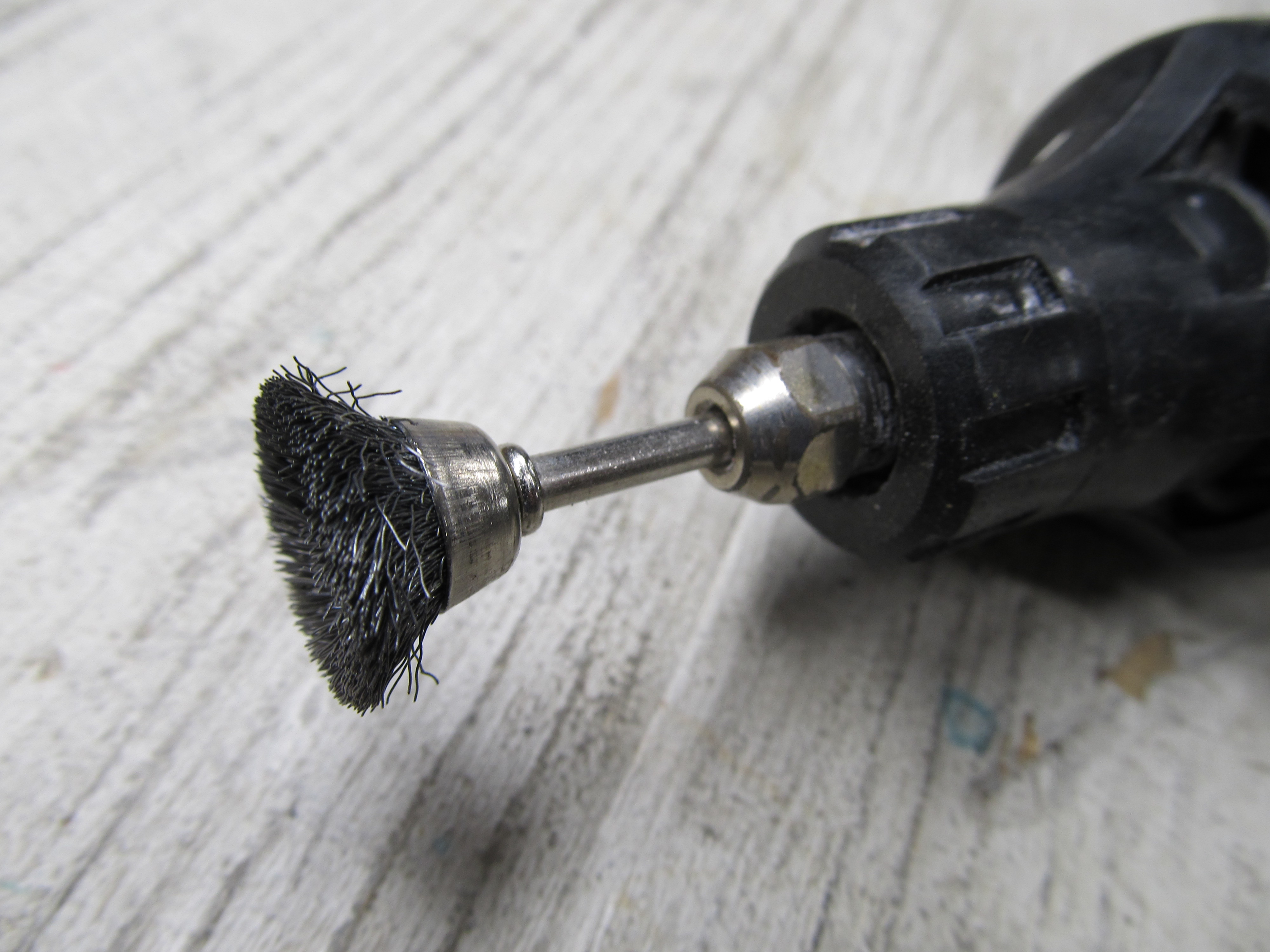
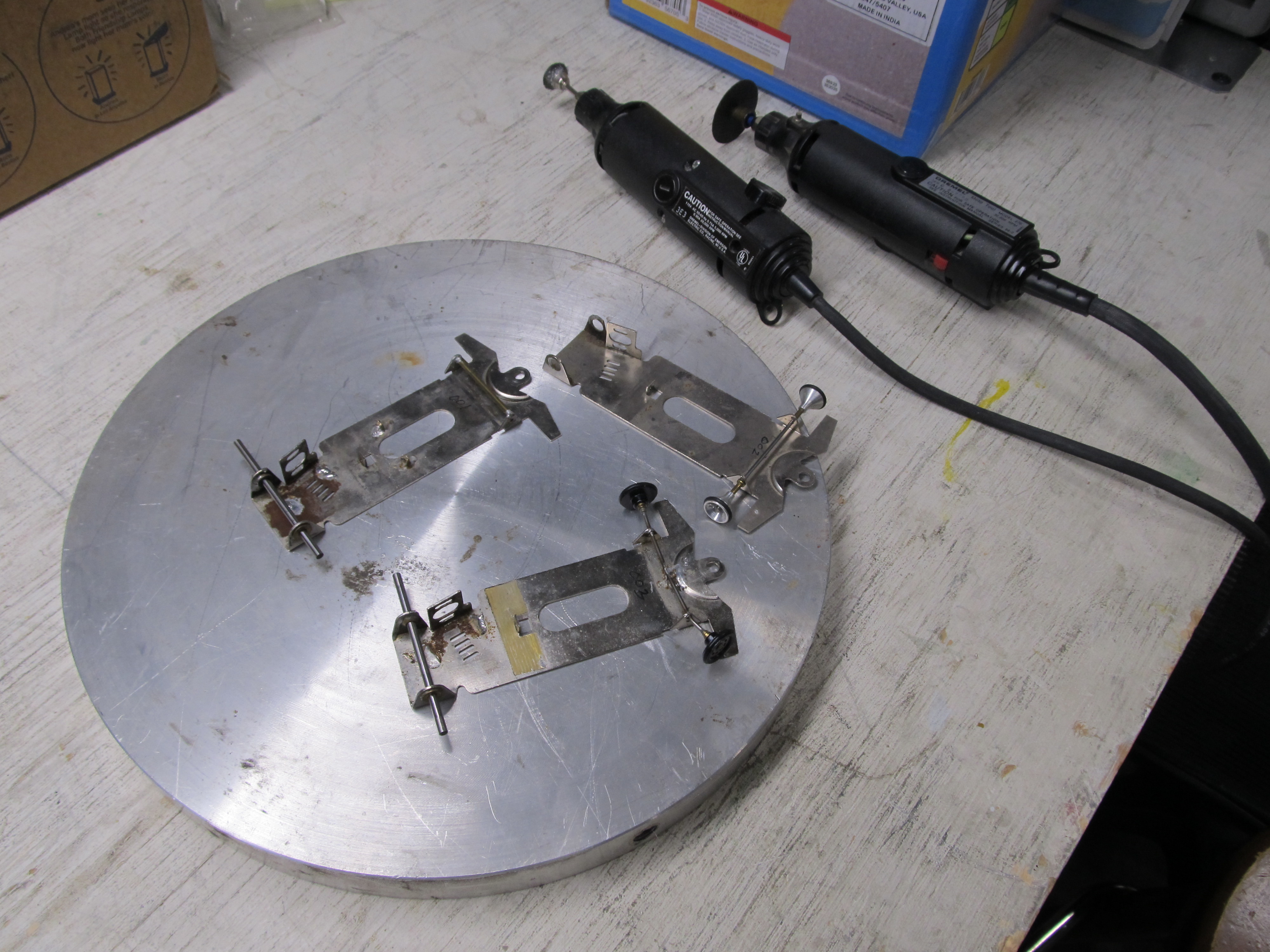
I used a wire brush on my Dremel tool to clean up the chassis, removeing rust and corrosion. I've found this type of wire brush works the best for me. It doesn't seem to lose or throw wires nearly as bad as the other type.
http://www.naste.org/members/bill/Slab_35.jpg

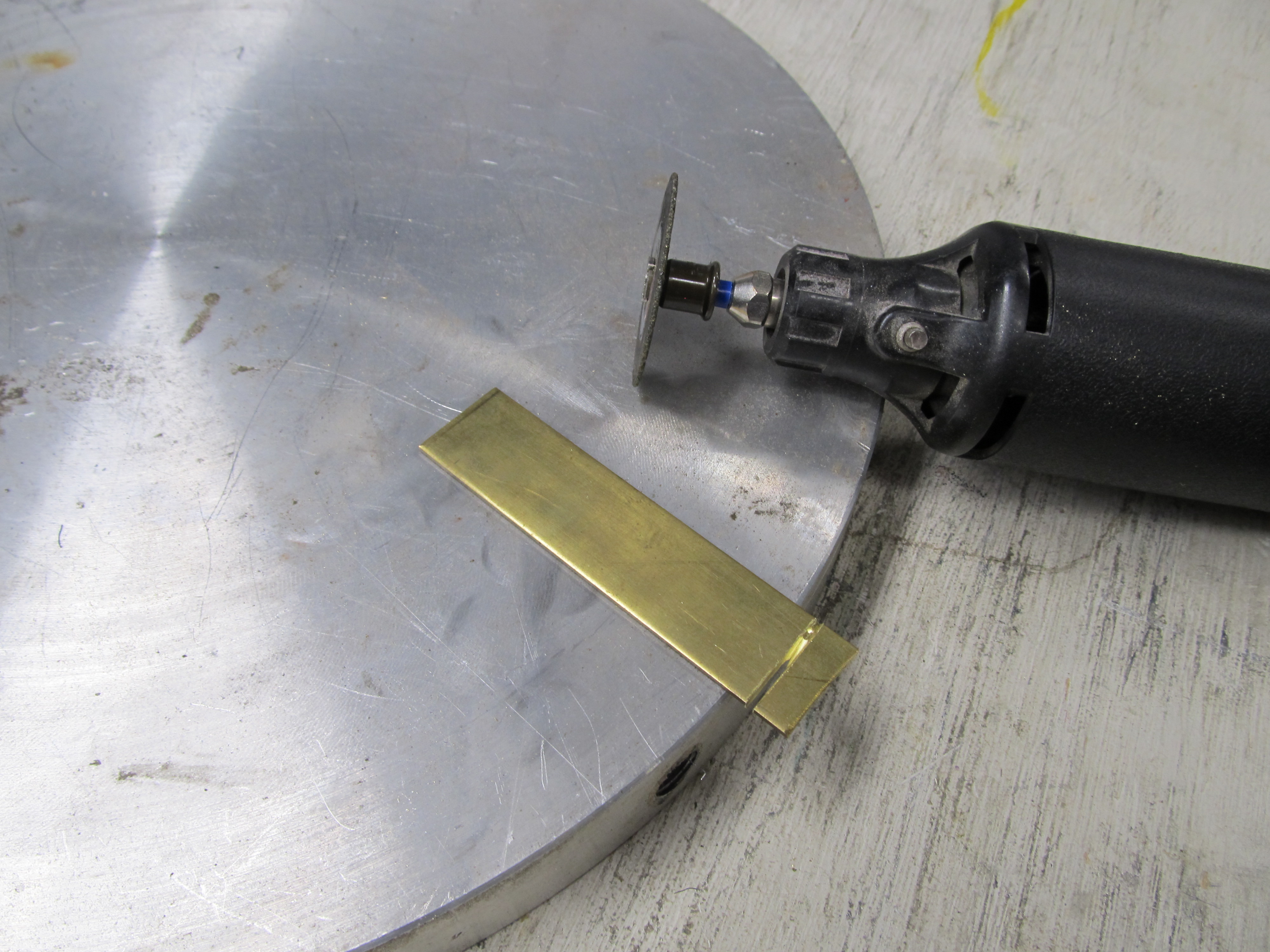
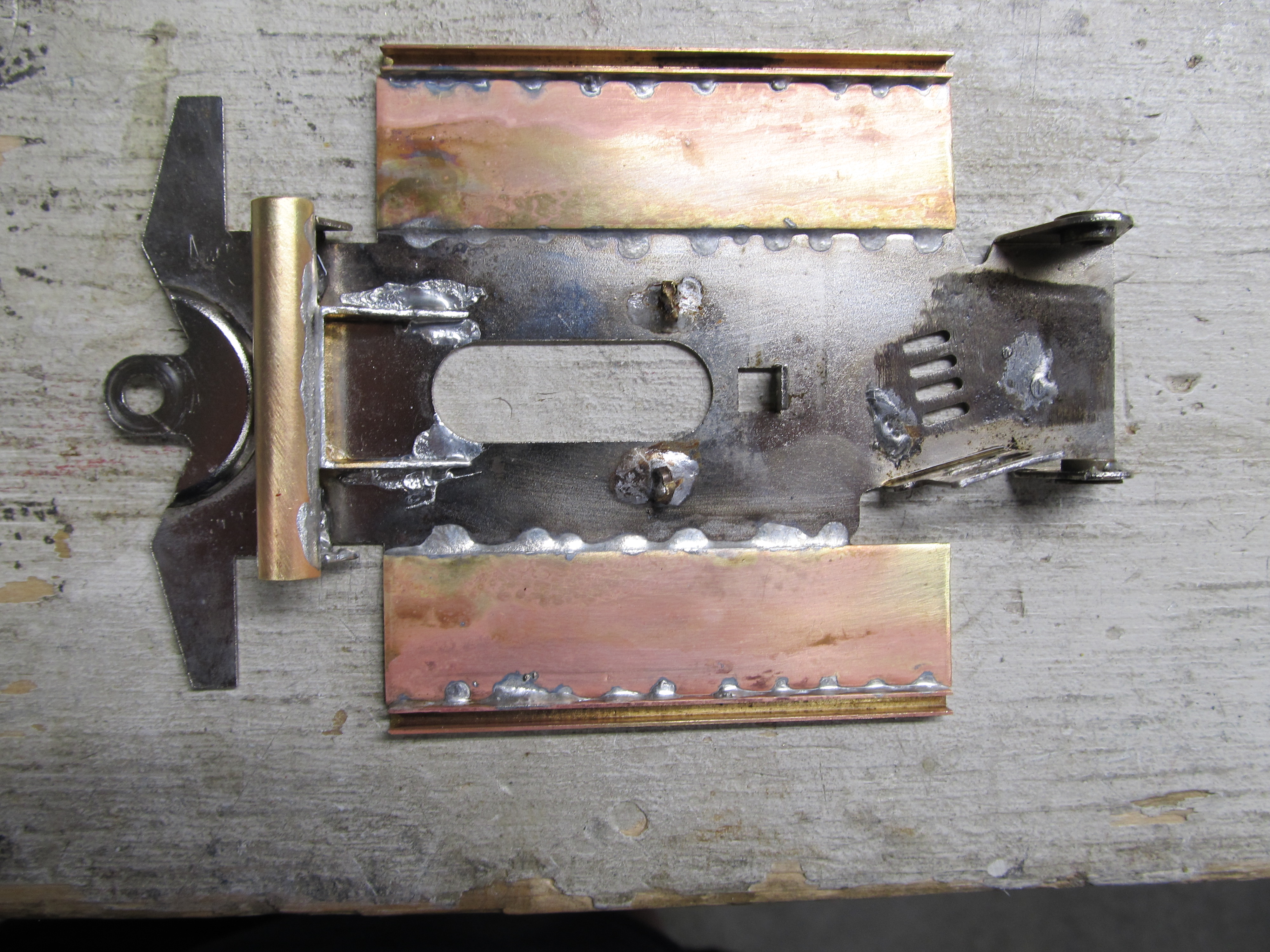
I decided I would solder .062" side pans to the center section. I used .750" brass strip and cut it to length. One piece for each side. So far a very simple modification. The rear motor mount and axle mount will remain unaltered. I have a large round piece of aluminum that I used when cutting the brass strip with my Dremel tool and a cut off wheel. Laying the brass on the aluminum while cutting allows the aluminum to work as a heat sink, keeping the brass strip from getting too hot to handle.
http://www.naste.org/members/bill/Slab_37.jpg

3

Re: Nostlagia.......Rookie Northwest Style.

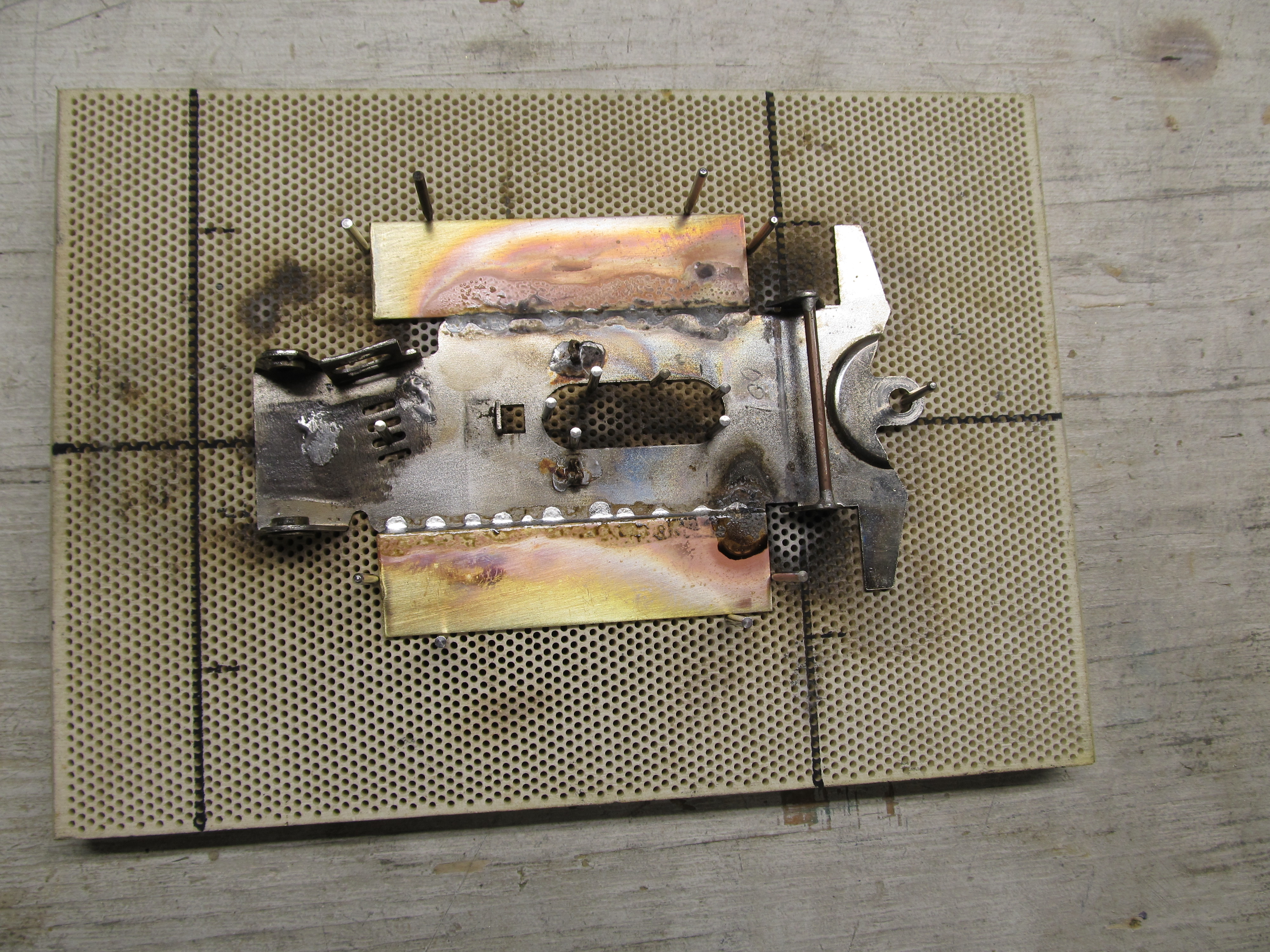
Once the strip was cut for the side pans, I jigged the chassis up on my soldering block and soldered them in place.
http://www.naste.org/members/bill/Slab_39.jpg

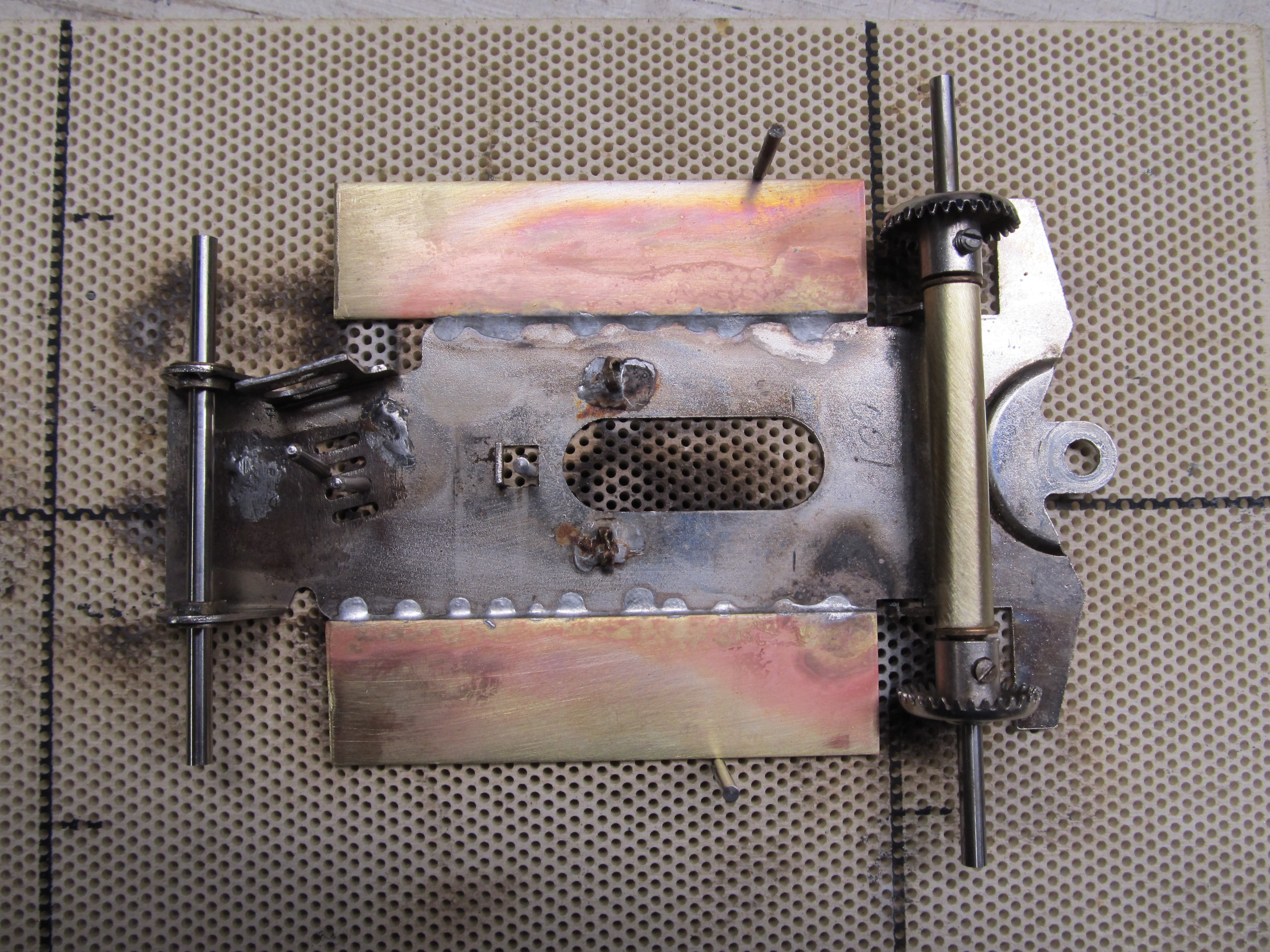
I decided to make a new front axle mount to accomodate front tires and wheels with a minimum .800" diameter. This will allow me to make additional modifications to the chassis and be able to race in a Northwest True Scale Class should this experiment go sideways. I soldered a brass tube across the chassis to hold the front axle oillites, with a brace behind it. Old metal crown gears were used as wheel jigs.
http://www.naste.org/members/bill/Slab_41.jpg

After the front axle mount was finished I soldered "U" channel brass strip to the sides of the chassis to serve as body mounts. At this point the chassis was pretty much done. It's been a long time since I have completed any sort of chassis build in one day. I spent about 4 hours on this one, with a lot of time wasted when my torch ran out of fuel!
http://www.naste.org/members/bill/Slab_42.jpg

I assembled the chassis for testing. I installed an old Parma pink endbell 16D motor. I didn't think this chassis will handle much power. The first few test laps indicated to me why nobody built any chassis like this. It was crap! It handled very badly, jumping up and down all over whenever the throttle was applied quick and hard. This thing had all kinds of traction! I replaced the rear tires with an older set that I figured wouldn't be as tacky. That settled the chassis down somewhat, but it was still a handfull! It could run 5.8 second laps pretty consistently, dipping into the 5.6 second range occassionally. Not great.......It was still a fun day going from sketch to completed build and testing all within a single day! That is BIG for me! What now?...Well I'm not quite done with it. I'm going to try another motor, maybe an old Falcon, to see if I can calm it down. Probably change the gearing to a higher ratio at the same time. If I can make it work, this will be a really easy build to put some of my Team Bluegroove bodies to use. I have plenty of "Flexi" type chassis to use!
http://www.naste.org/members/bill/Slab_33.jpg

Not to worry, this is NOT going to be a new class! This is just an old man revisting his early slot car building past.